A coffee roaster in downtown San Francisco has been roasting since 1965. Its owner designed a system with the help of ChatGPT, software and sensors that spray water on the coffee beans, to fix a problem in his own production. He also used generative AI to make his advertising and marketing more efficient. The story is in the U.S. Chamber of Commerce's 2025 small business report [1].
It is a useful place to start, because it is not science fiction. Nobody handed the business over to a robot. An owner who knew his own operation used AI to remove one chore. That is still the best way to think about AI agents for a small business.
How many small businesses actually use AI?
It depends on who is asking, and how. The Chamber's survey, run by Teneo with 3,870 U.S. small businesses (fewer than 250 employees) [1], found that 58% say they use generative AI, up from 40% in 2024 [2]. The U.S. Census Bureau found that less than 20% of firms with four or fewer employees reported using AI [3].
Both can be true. Many owners have tried a chat tool for writing or ideas. Far fewer have AI doing real work inside the business every day. That gap is where agents come in, and where most of the risk sits.
The study that should shape your expectations
The most useful evidence is not a survey. It is a field experiment. Researchers reported by UC Berkeley Haas gave an AI business assistant to 640 entrepreneurs in Kenya running small businesses, and compared them with owners who did not get it [4].
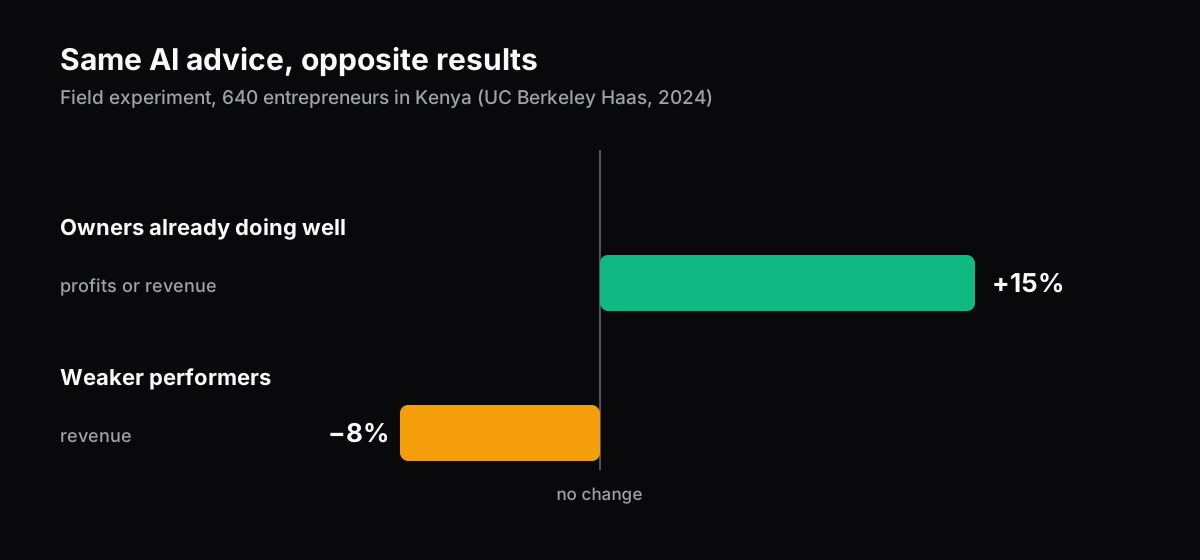
The owners who were already doing well saw profits or revenue climb by 15%. The weaker performers did worse, with an 8% drop in revenue. Same tool, opposite results. AI advice amplified the judgment that was already there.
Chatbot or agent: what is the difference?
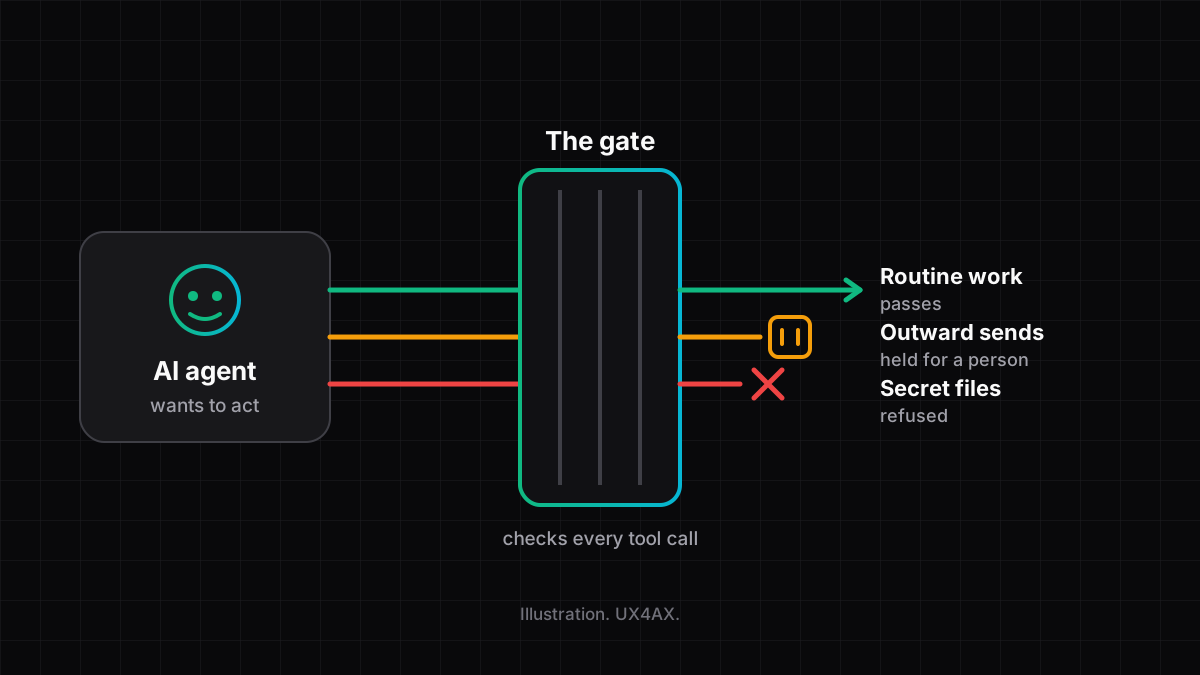
A chatbot answers. An agent acts. It can send the email, update the listing, book the slot, or change a record. That is what makes agents worth having, and it is also why they need more care than a chat window.
Jobs where an agent earns its keep
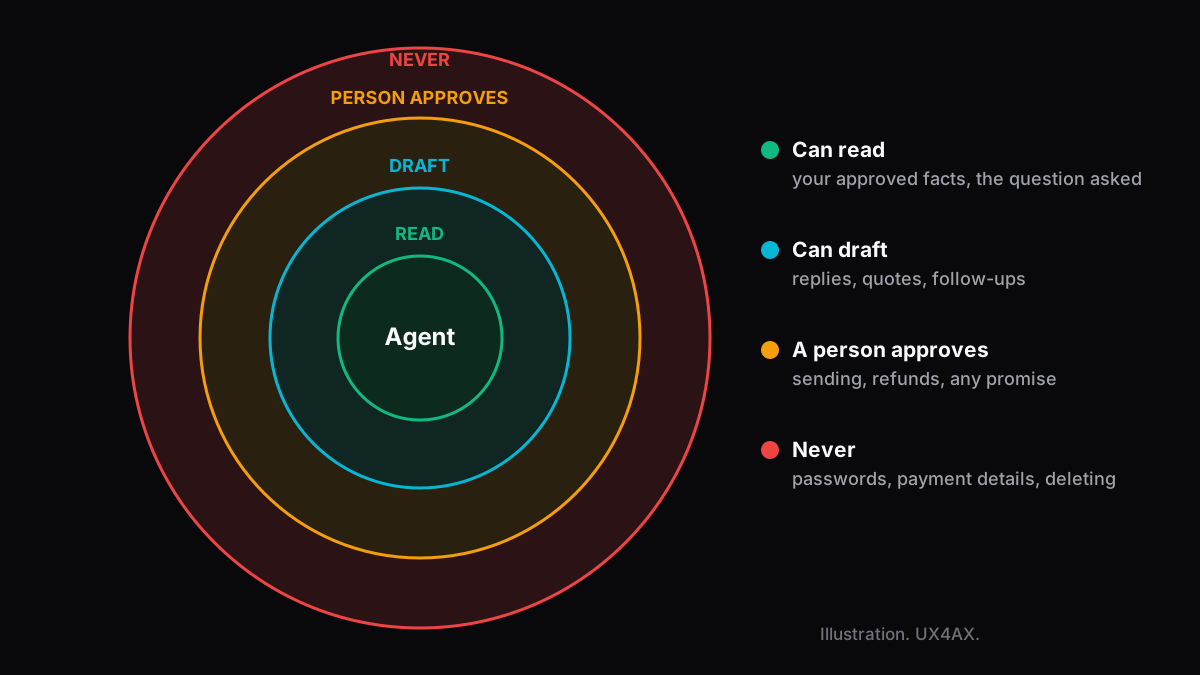
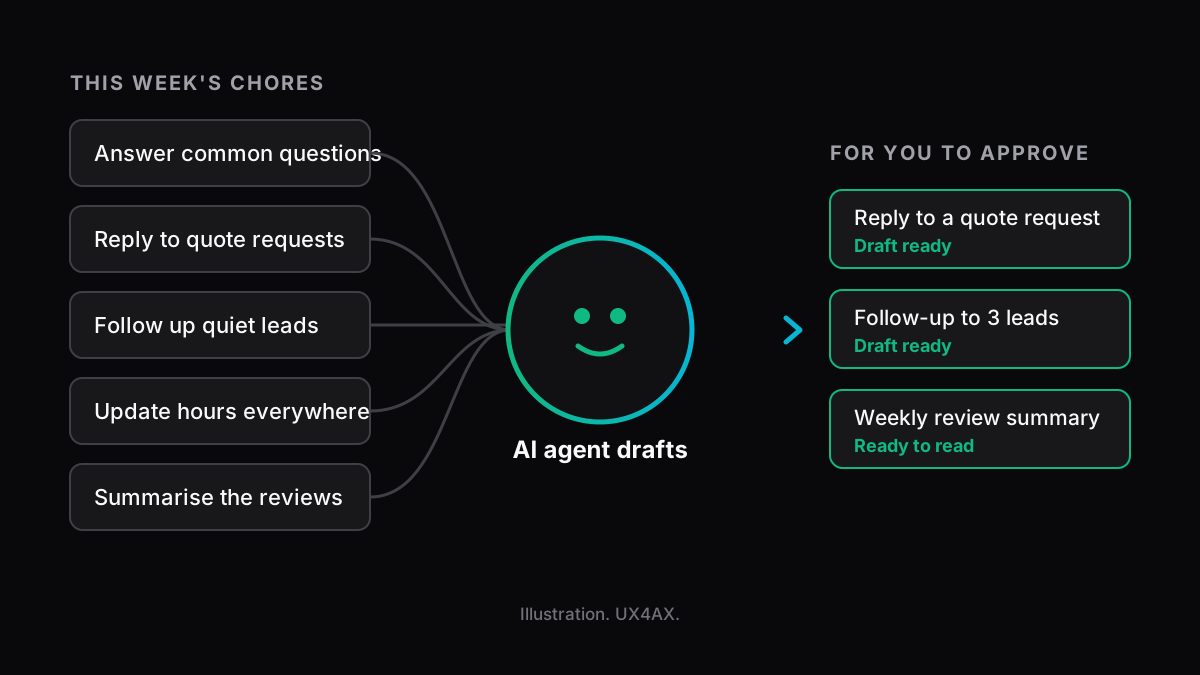
- Answering common customer questions, from a list of facts you wrote and approved (hours, services, prices you choose to publish).
- Drafting replies to new inquiries and quote requests, for you to approve before they go out.
- Following up on leads that went quiet, with messages you have pre-approved.
- Keeping your business details the same everywhere they appear, so AI assistants and search engines describe you correctly.
- Summarising reviews and support conversations each week, so you see the patterns without reading every message.
Jobs to keep away from an agent, for now
- Anything that moves money, issues refunds, or changes prices without a person approving it.
- Promises about policies, warranties or timelines that are not already written down.
- Access to passwords, payment details or customer records it does not need for the job.
A five-step way to start
- 1Pick one chore that eats time every week and that you can judge well.
- 2Write down the facts the agent may use. If it is not on the list, the agent should say it does not know.
- 3Start in draft mode: the agent prepares, a person approves anything that leaves the business.
- 4Measure one thing: hours saved, replies sent faster, or leads followed up.
- 5Widen its job only after it has a track record, one permission at a time.
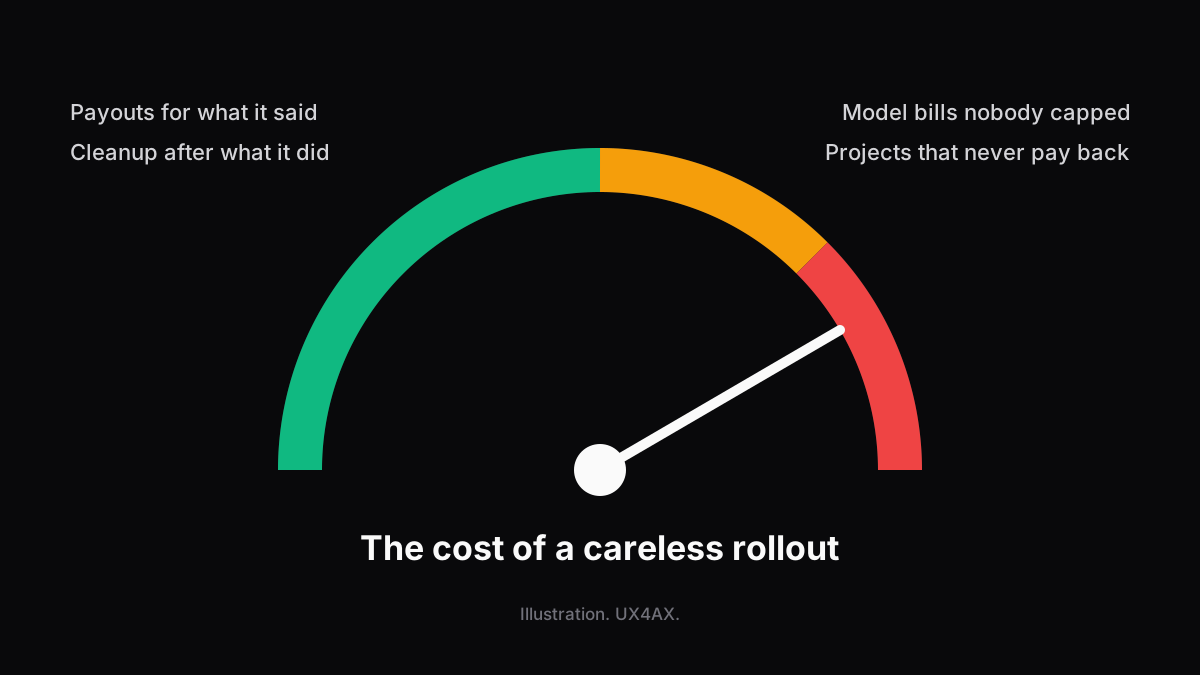
Want to see what happens when an agent is not set up this way? Read what a careless agent rollout really costs.